It’s always the same story. The flight is going well, you’ve already watched half a film on your tablet and you’re almost dozing off. Suddenly the seatbelt sign goes ding, the plane jolts and your heart leaps into your throat.
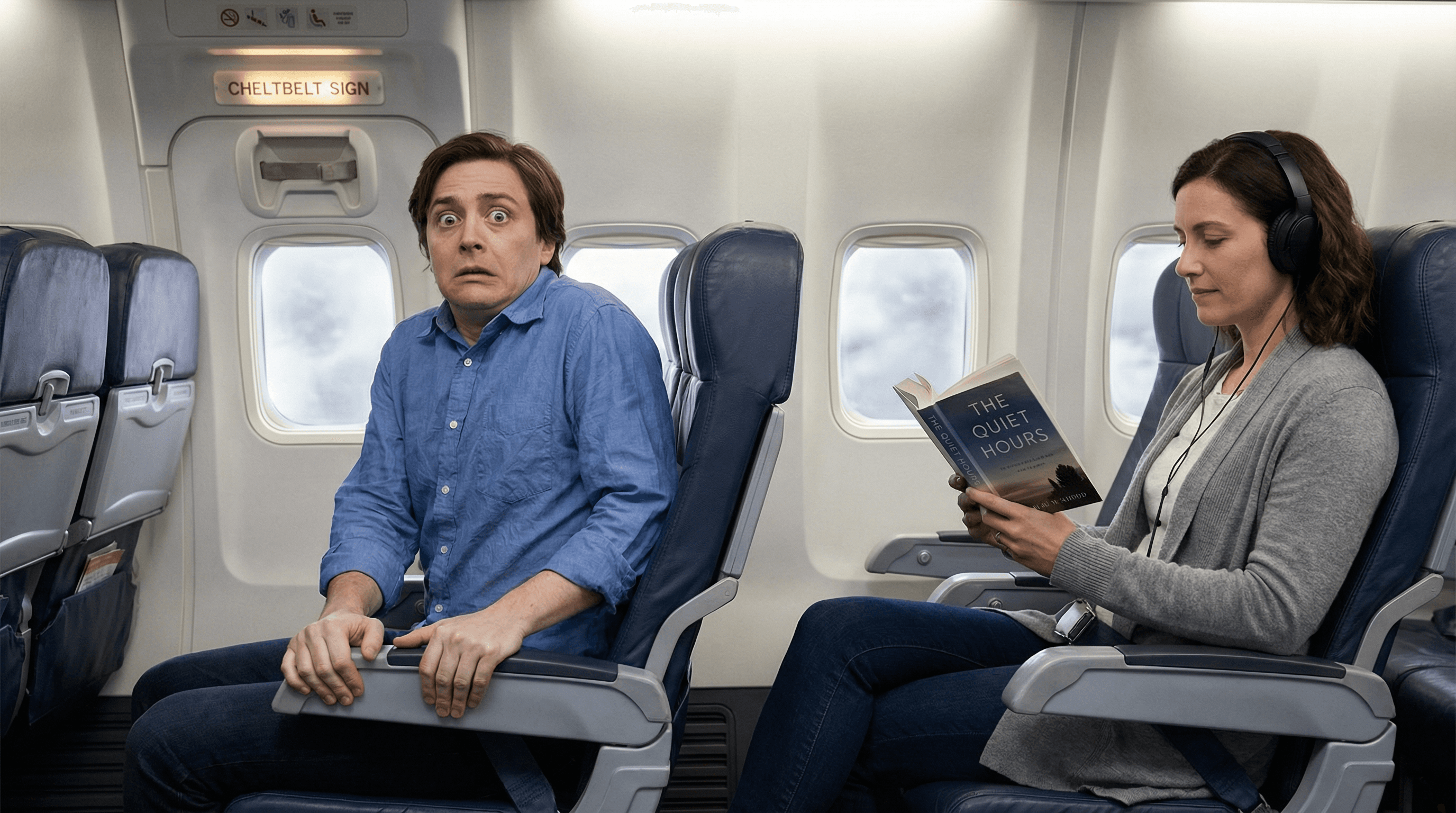
You start gripping the armrests so hard your knuckles turn white. You’re praying to every saint you know (and the ones you don’t), making promises to be a better person if you land alive. Meanwhile, you glance over and the flight attendant is calmly serving coffee, as if she were strolling through a garden.
Fear of flying and turbulence panic are real, but they’re completely irrational. Martin has gathered the best psychological (and practical) tricks to outsmart your brain and land zen on your next holiday.
1. The Jelly Science (The Perfect Analogy) 🍮
Our brain thinks the plane is flying through “empty space” and that, if there’s a hole, it’ll fall. Wrong.
At 10,000 metres, the air is dense. Picture a bowl full of jelly with a toy car in the middle. If you shake the bowl, the jelly wobbles, the car rocks side to side… but it doesn’t sink to the bottom. The plane is the car and the air is the jelly. Turbulence is just the air changing direction (wind currents, clouds). Is it uncomfortable? Yes. Is it dangerous to the plane? Zero.
2. The Glass-of-Water Trick 💧
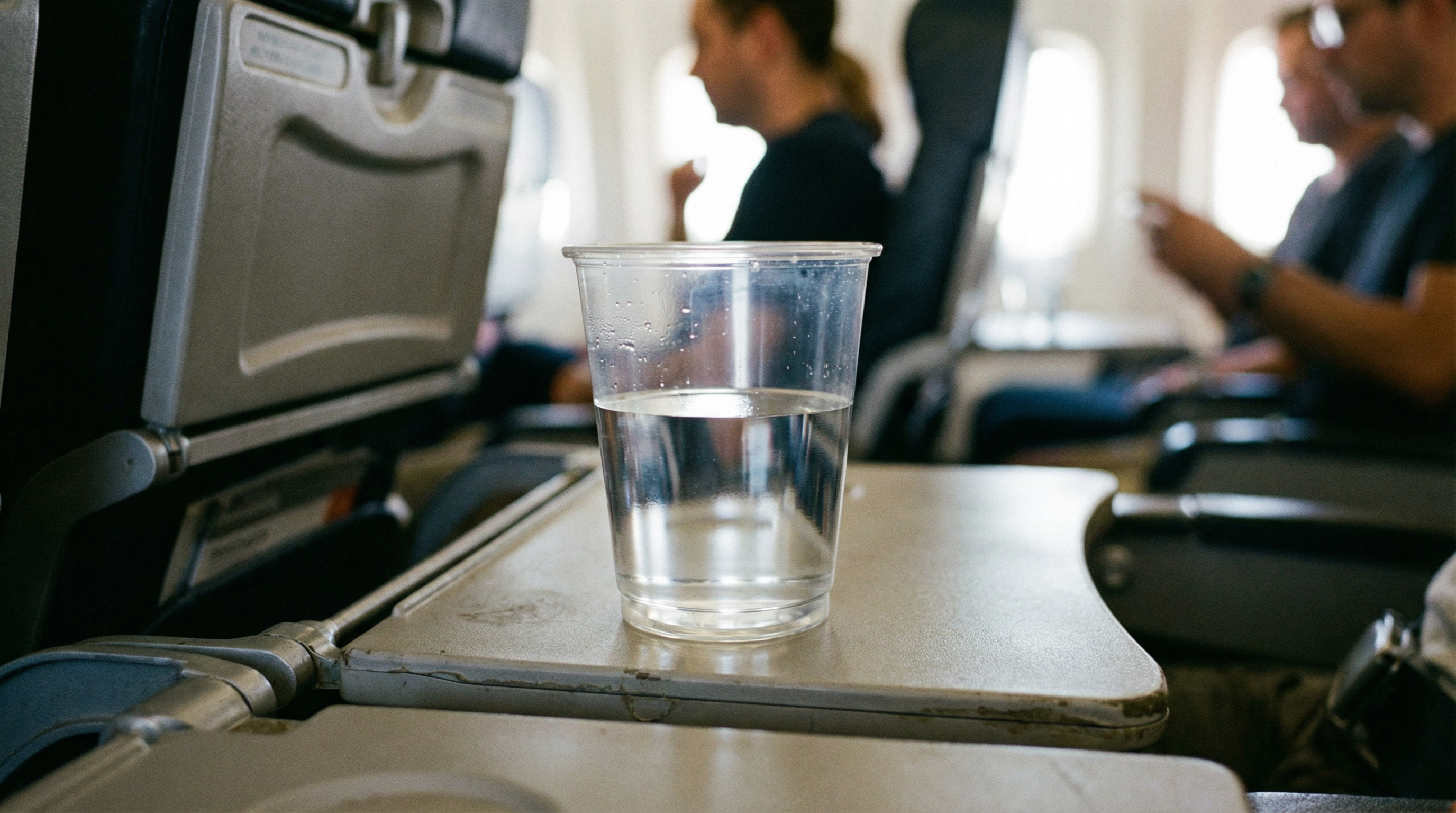
When the plane shakes a lot, your head tells you you’re flipping upside down and plunging straight down. Your inner-ear balance system is playing tricks on you.
The trick: Ask the crew for a glass of water (no ice) and put it on the tray table in front of you. When turbulence hits and you think the world is ending, look at the water. You’ll notice it barely moves or only ripples slightly. The visual proof that the plane is steady helps switch off the panic alarm in your brain.
3. Where to Sit to Feel Less of the “Whip” 💺
Not all seats on a plane are created equal when it comes to turbulence.
If you’re afraid of jolts, never sit in the tail of the plane. The back works like the tip of a whip; every movement gets amplified.
The golden rule: sit over the wings. The wings are the centre of gravity and lift. It’s the most stable area and where you’ll feel the bumps the least. Pay the extra €5 or €10 to choose your seat — your sanity will thank you.
4. Lift Your Feet off the Floor 🦶
This sounds ridiculous, but it works. A lot of what you feel during turbulence is the vibration transmitted through the plane’s floor into your legs.
If the plane starts shaking a lot, try lifting your feet slightly off the floor (you can rest them on the metal bar of the seat in front or simply cross them). By cutting physical contact with the floor, your body absorbs less vibration and the “falling” sensation drops dramatically.
Cut the Stress at the Root (Before You Fly) 🚗
If you already know you’ll be tense for 3 hours in the air, don’t make the mistake of adding even more stress on the ground.
Picture the scene: you finally land. You survived the turbulence. You let out that monumental sigh of relief. But instead of heading off to relax at the hotel or at home, you remember you still have to drag your luggage in the rain to catch a bus, or that you left your car parked on a sketchy street and you’re not even sure it’s still there.
Your stress shouldn’t start before the flight or carry on after it.
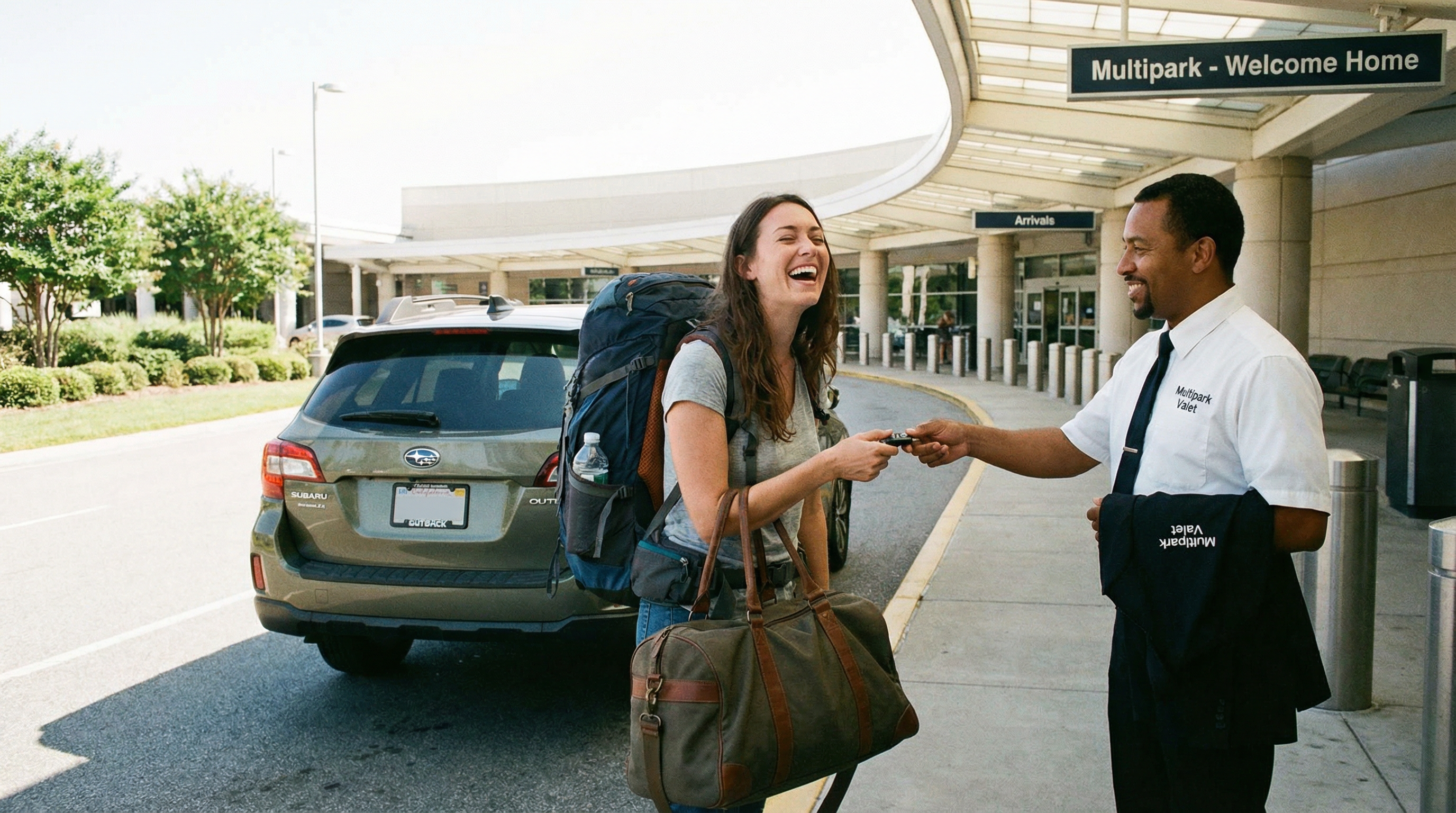
Cut the issue at the root with Multipark. Get in your car, put your favourite playlist on and drive to the airport in your cocoon of comfort. You arrive at Departures, hand the key to our Valet Parking driver and we keep your vehicle in a hyper-secure car park.
You walk to the plane focused only on staying calm and doing the water trick. And when you land, your car is right there at the door, ready to welcome you back.
Fly without fear. Run a simulation and book your Valet Parking on the Multipark website and land zen!