Before you start arguing about the line-up, here's the real history: how a stubborn man convinced Frank Sinatra, filled Rio with Queen, and ended up building the biggest "city of rock" on the planet — in Lisbon too. Spoiler: you can go without losing your patience (or your car).
"The history of Rock in Rio" sounds like the kind of chat you'd have when you arrive too early and have nothing else to do. It isn't. The history of this festival is, basically, the history of how you convince the world that an impossible idea actually works. And it's a good story to tell. Here it is — no padding, with the practical bit at the end for anyone heading to Rock in Rio Lisboa 2026.
It all started with a stubborn man and Frank Sinatra
Rock in Rio is the work of one man: the Brazilian businessman Roberto Medina. Years before the first festival, he did something everyone told him was impossible — he brought Frank Sinatra to sing in Brazil. It went well. And it was that victory against "it can't be done" that gave him the nerve to imagine something far bigger: bringing together the biggest names in world music in a "city" built from scratch.
Most people would have stopped at Sinatra. Medina didn't. And just as well.
1985: Queen, AC/DC, and over a million people
The first edition took place in January 1985, in Rio de Janeiro, at a moment when Brazil was emerging from two decades of dictatorship. To host it, the famous "City of Rock" was built. The line-up is, to this day, one of the most legendary ever: Queen — with a Freddie Mercury who lodged himself in the collective memory —, AC/DC, Iron Maiden, James Taylor, Rod Stewart, and plenty more.
The result went into the history books: over ten days, more than a million people passed through the grounds. Few events anywhere have ever matched it.
To sum up: the guy brought Sinatra, decided he could do more, built a city from scratch, and put Queen inside it. In 1985. Without the internet.
From a one-off party to a global brand
The success was such that Rock in Rio stopped being an event and became a global brand, a byword for huge shows and a positive message — the motto "For a Better World", with a genuine commitment to social and environmental causes. It's not just marketing: the festival has tied music to concrete projects over the years.
Lisbon entered the history books in 2004
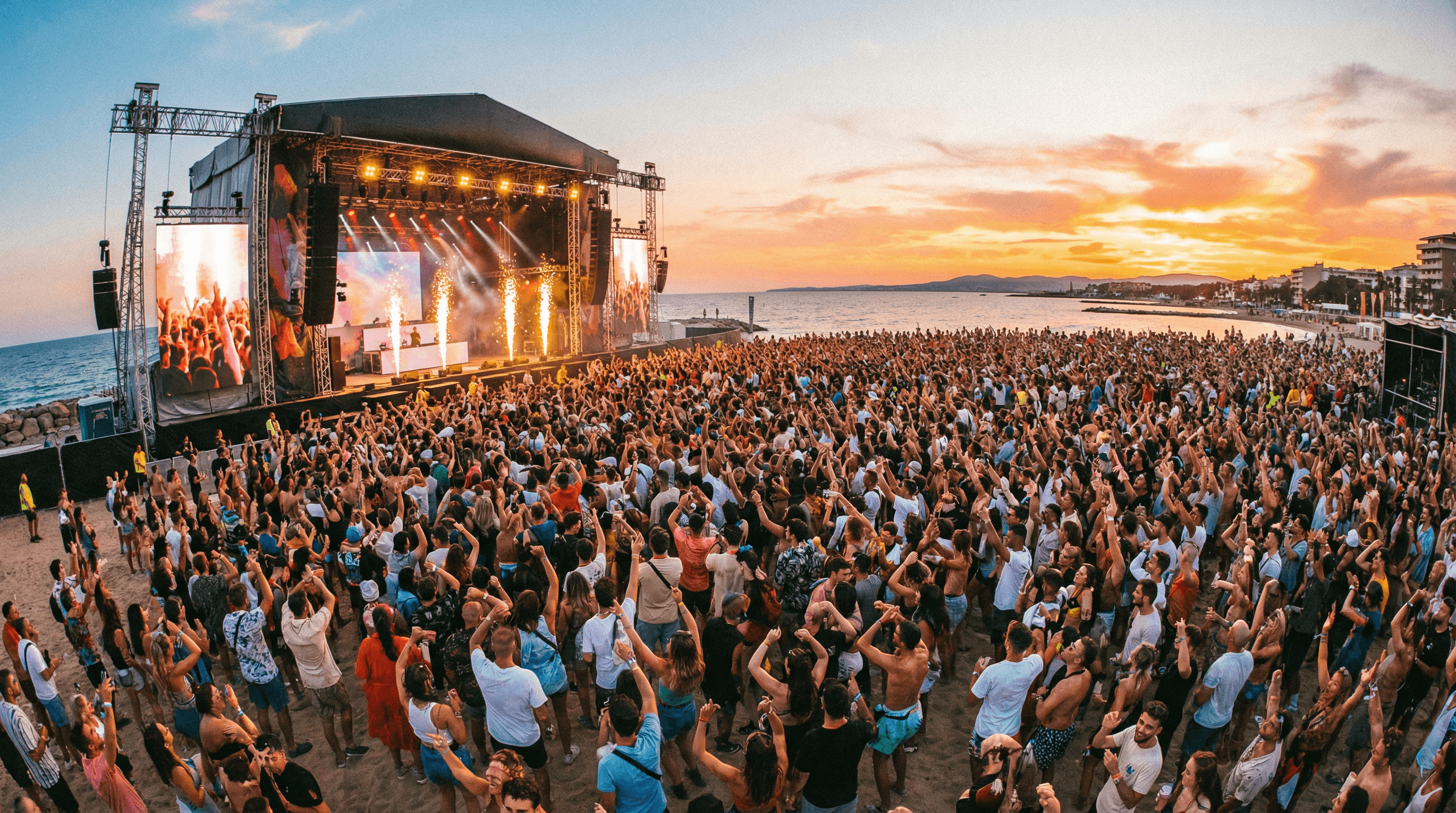
In 2004, Lisbon became the first city outside Brazil to host Rock in Rio — the starting gun for the festival's international expansion (Madrid and others would follow). For years, the Portuguese "City of Rock" was set up in Parque da Bela Vista; in recent editions it moved to Parque Tejo, in the eastern part of the city, next to Parque das Nações and Oriente.
Today it's one of the biggest festivals in Europe and one of the highlights of the Portuguese summer — the kind that puts grandparents, parents, and kids in front of the same stage.
Curiosities you'll want to drop at the dinner table
- It's not just music. The "City of Rock" is a world of its own — a Ferris wheel, a zip line, and dozens of experiences beyond the concerts. Some people go and barely see the main stage.
- Several stages at once. From the Palco Mundo to the alternative stages, there's rock, pop, hip-hop, and electronic music playing simultaneously. Deciding where to be is half the strategy.
- Lisbon was a pioneer. The festival's first international "branch", before anyone else. National pride with a soundtrack.
- A cause in its DNA. "For a Better World" has been there from early on — and it didn't stay on the poster.
- Collective memory. Queen's 1985 performance is still cited today as one of the greatest ever. Forty years on.
Going to Rock in Rio Lisboa 2026? History aside, there's a practical decision to make: where to leave your car. Valet at the gate, in Oriente, or at the airport — with a spot guaranteed across all 4 days. → See where to park for Rock in Rio
And in 2026? Two weekends at Parque Tejo
In 2026 you've got two weekend options. Rock in Rio Lisboa returns to Parque Tejo on 20, 21, 27, and 28 June, with gates at 1 pm. The line-up mixes the likes of Katy Perry, Linkin Park, and Rod Stewart with dozens of other names spread across the various stages — meaning there's rock, pop, and everything in between.
Pick the weekend that suits you best (or both, if you're old-school) and sort your tickets in good time. The full day-by-day line-up is on the festival's official site — that's where you confirm who's playing when before you lock in any plans.
The boring (but important) bit: how you get there and where you leave the car
Now the truth nobody tells you in the excitement of buying a ticket: Parque Tejo fills up early. Street spots and parking around Oriente vanish hours before the gates open, and circling for a space while the show is starting is no way to begin the night.
The smart move is to sort this once. You've got three clean options: valet at the gate (hand over the car and walk straight to the grounds), park in Oriente and go on foot / one station away, or leave it at the airport if you're coming from out of town and flying in for the festival. With all of them, what matters is the same: a fixed price, free cancellation, and a spot guaranteed across all 4 days — none of the roulette of turning up and hoping there's room.
See the three options, with the location and what's closest to you, here: See where to park for Rock in Rio.
An honest conclusion
Rock in Rio is one of those festivals worth knowing for the history alone — it was born from sheer stubbornness, built cities out of nothing, and for forty years it's been bringing generations together in front of the same stage. Go for the music, stay for the experience.
The only dull part is the logistics — and that you sort once and for all. Sort the car in advance and the whole day is yours: music, friends, and zero stress at the gate. Book your spot for Rock in Rio Lisboa 2026 and show up relaxed.