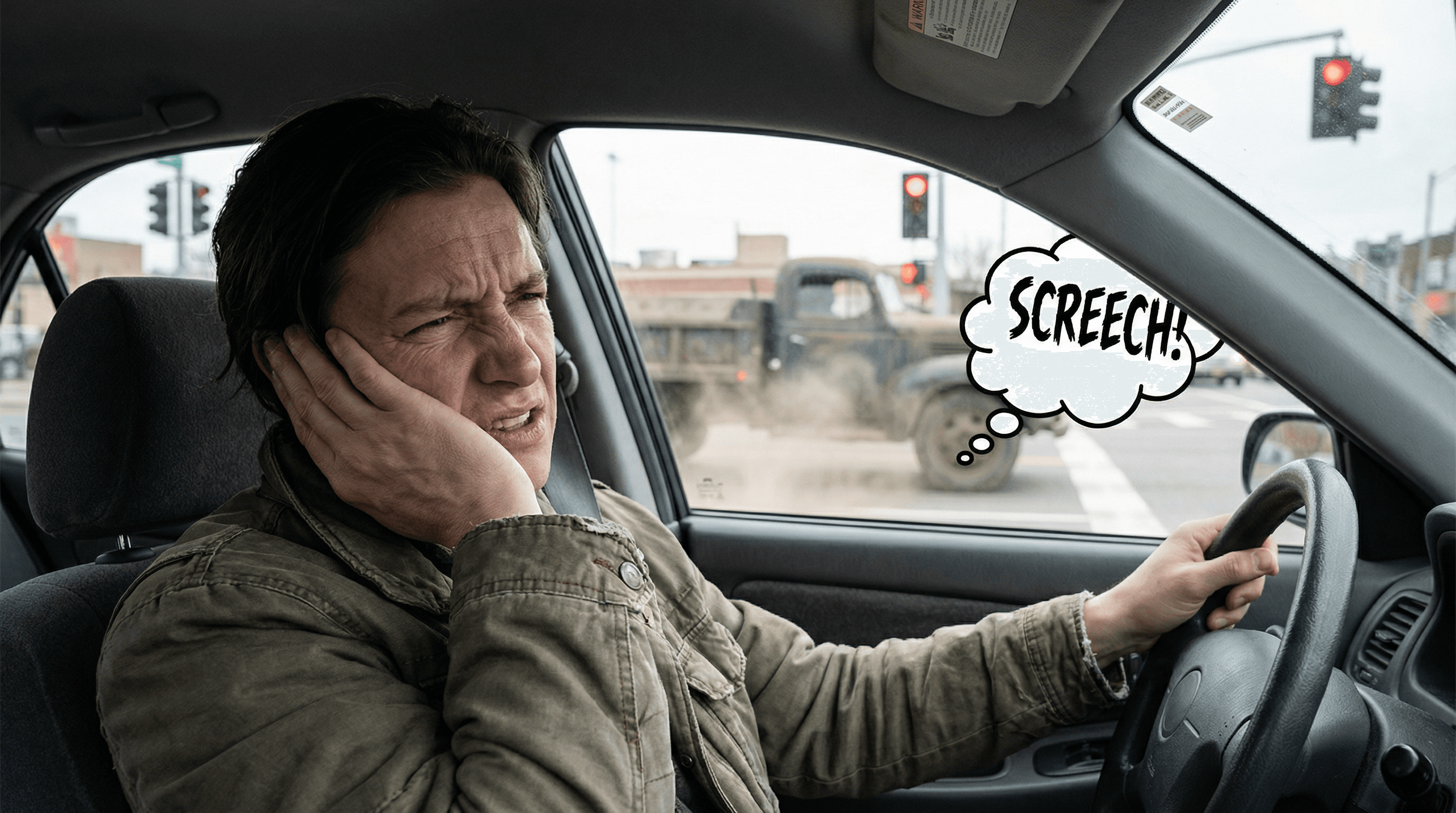
You're coming up to a traffic light, you press the brake and suddenly your car decides it wants to be an opera singer. A high-pitched squeal, a metallic scrape or a strange vibration in the pedal that makes you think: "Am I going to die?"
Calm down. Not every noise from the brakes means you're about to lose your brakes halfway down the Serra da Estrela. But some mean exactly that. Martin walks you through how to tell "quirk" from "fault" and when you need to run to the workshop.
The High-Pitched Squeal (The Friendly Warning) 🔊
If you hear a thin, high-pitched sound, like "eeeeeee", every time you brake gently, it's very likely your brake pads are nearing the end of their life. Most modern pads have a small metallic indicator that, when the pad wears down to a certain point, deliberately starts rubbing on the disc to warn you.
It's the automotive equivalent of an alarm saying: "Hey, sort me out before it's too late."
Urgency: Medium. You have a few days or weeks, but don't ignore it. Book the workshop.
The Metallic Scrape (The Real Danger) ⚠️
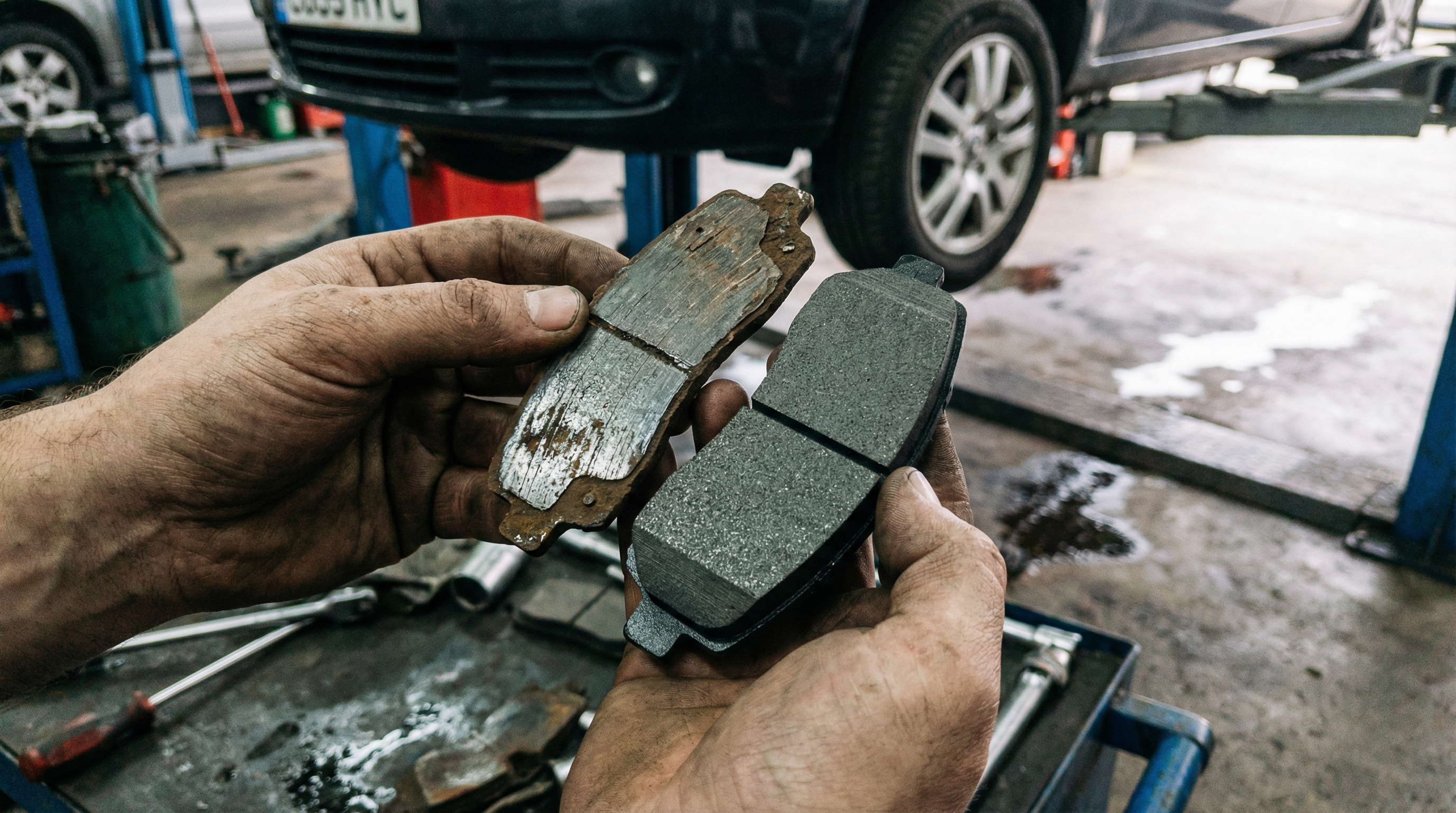
If the high-pitched squeal has evolved into a deep metal-on-metal sound, like "rrrrrrr", as if you were dragging an anchor along the asphalt, you have a serious problem. The pads are no longer there. What's stopping your car is literally the metal backing of the pad scraping directly on the brake disc.
This means two very bad things: first, your braking capacity is severely compromised (you may not be able to stop in time). Second, you're destroying the brake discs, which are far more expensive to replace than the pads.
Urgency: Maximum. Go to the workshop today, not tomorrow.
The Vibration in the Pedal (The Warped Disc) 🫨
If, when braking at higher speeds (like on the motorway), you feel the brake pedal "pulsing" under your foot, as if it's trembling, the problem is warped brake discs.
This happens when the discs get too hot (heavy braking on long descents) and then cool unevenly (for example, you drive through a puddle after heavy braking). The disc gets slightly bent and, every time the pad touches the high spot, you feel the "thump-thump-thump" in the pedal.
Urgency: Medium-high. Not an immediate emergency, but it gets worse over time and reduces braking effectiveness.
When It's Just "Quirk" and Not Fault 🤷
There are situations where the noise is perfectly normal and you don't need to panic:
- In the morning, on the first few metres: If the car has been parked all night, it's normal for the discs to develop a thin layer of surface rust. The first few brake applications make a slight "rrrr" that disappears within 30 seconds.
- After rain: Same reason. Moisture on the discs = temporary noise.
- New pads: If you just changed the pads, they need a "running-in" period (about 200-300 km) to bed in to the disc.
The Hook: Don't Discover the Problem on the Motorway ✈️
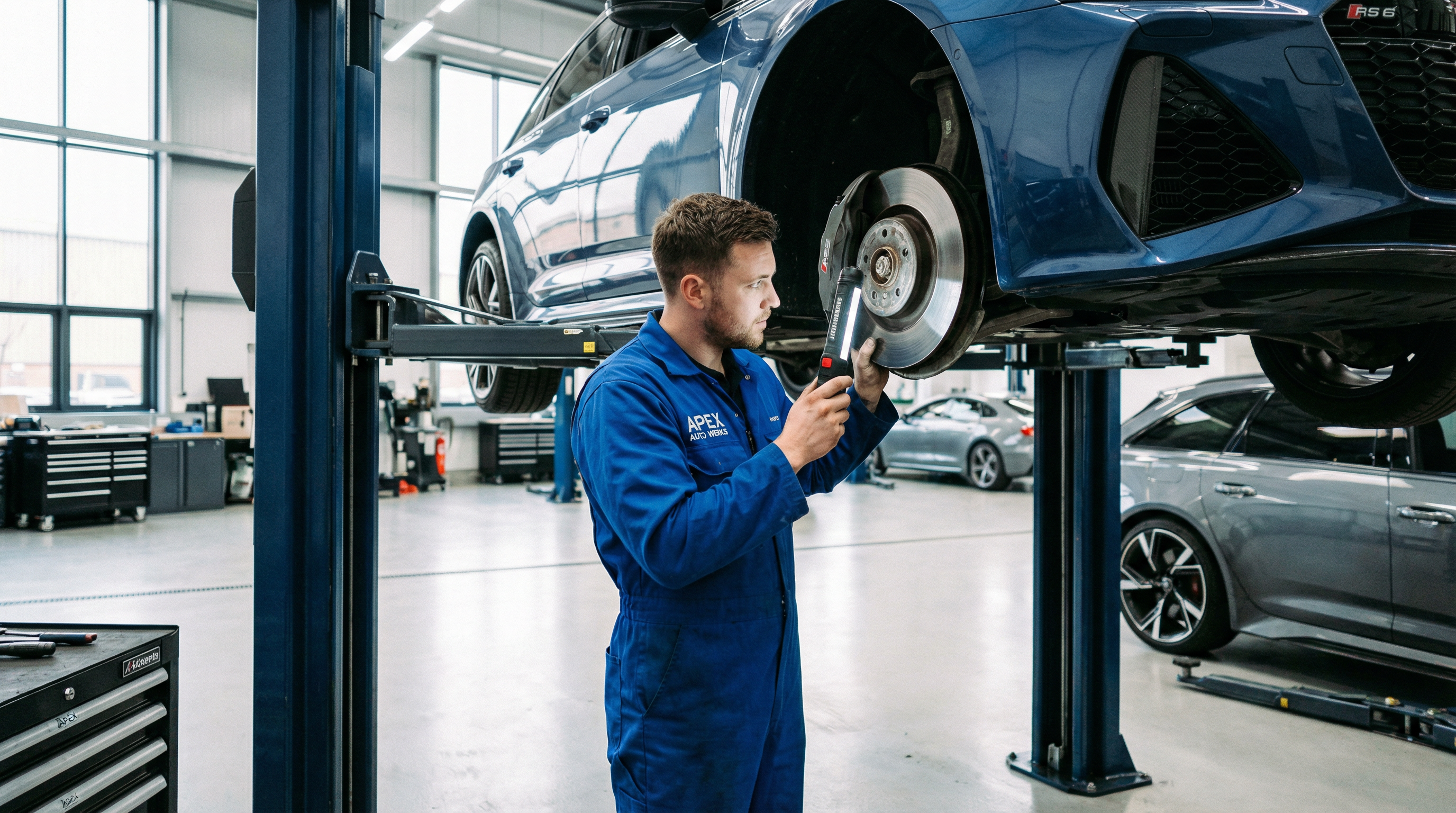
Do you know the worst place to discover you have a brake problem? On the motorway, on your way to the airport, with your flight leaving in two hours.
Multipark isn't just a car park. It's your automotive safety net. If you've been hearing strange noises for weeks and don't have time to go to the workshop (because life is like that), hand us the car when you travel and we'll take care of it.
Through our workshop partners, we can check the state of your brakes, change pads or discs while you're on holiday, and when you come back the car is as good as new and ready to brake silently.
Don't ignore your car's warnings. Run a quote and book your Valet Parking on the Multipark site and add the maintenance service so you can travel (and brake) with peace of mind!