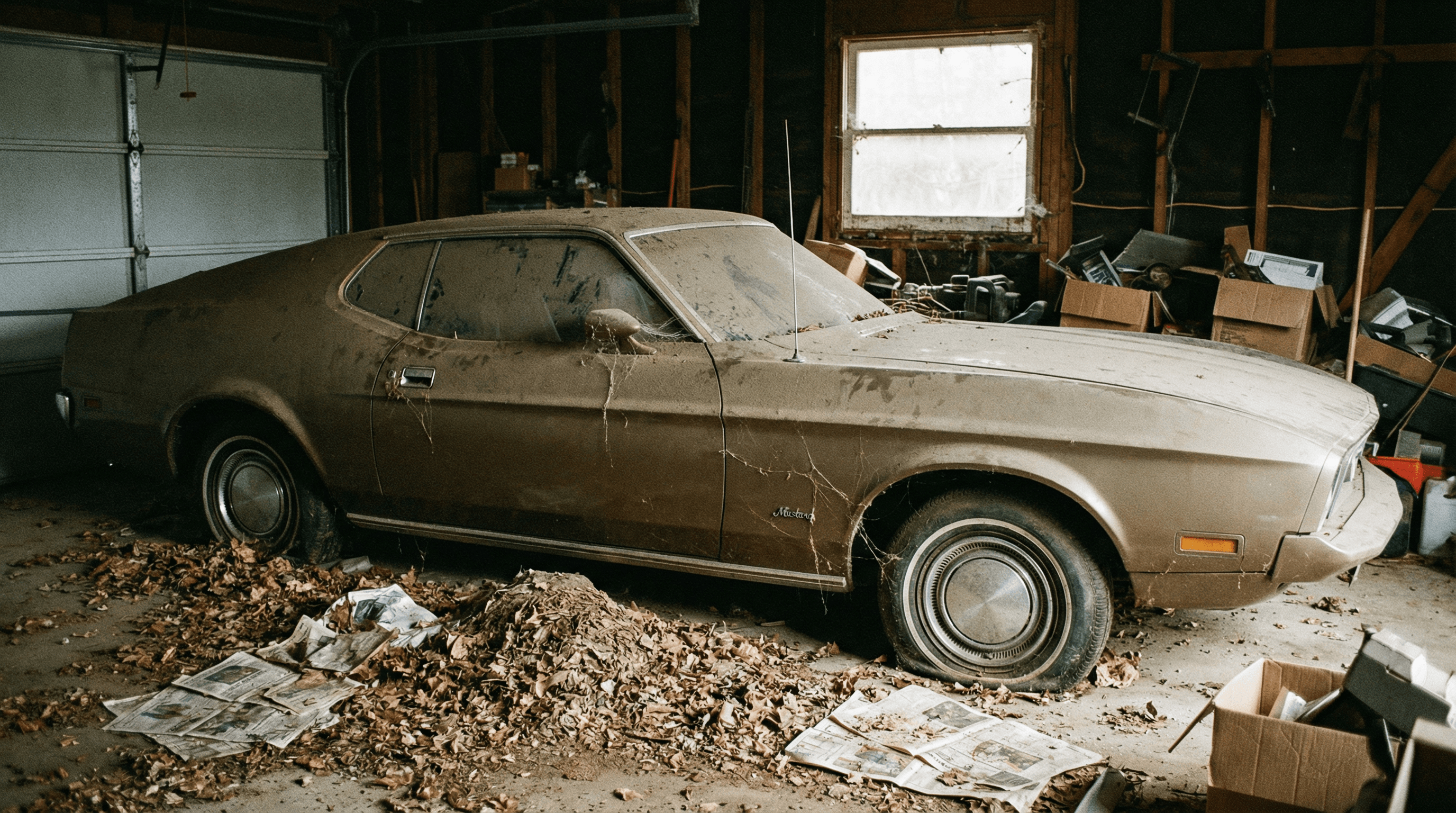
You're going on holiday for a month. Or you're going to work abroad for a few weeks. Or your car is just going to sit in the garage because you're using the company one. Whatever the reason, leaving a car parked for a long time isn't as harmless as it seems.
Cars weren't built to sit still. They're like dogs: they need to move. And when they sit too long, things start going wrong. The battery dies, the tyres deform, the brakes rust and the fluids degrade.
But with a few simple precautions, you can leave the car parked for a month (or more) without finding an automotive corpse when you come back.
Problem 1: The Battery (The Silent Killer) 🔋
The battery is the first victim of a parked car. Even with the engine off, there are systems that keep drawing power (clock, alarm, electronic modules in standby). Within 2–4 weeks, the battery can be completely drained.
Solutions:
- Turn off what you can: If the car will be parked for more than 2 weeks, unplug the dashcam, the GPS and any device connected to the cigarette lighter.
- Trickle charger: Invest in a smart charger (like the CTEK MXS 5.0, around €60–80) that keeps the battery charged without overcharging it. Plug it into the battery and the garage outlet and forget about it.
- Disconnect the negative terminal: If you don't have access to a power outlet, disconnect the negative cable (-) from the battery. This cuts all parasitic drain. When you return, reconnect it and the car starts as if nothing happened.
Problem 2: The Tyres (The "Egg" Effect) 🥚
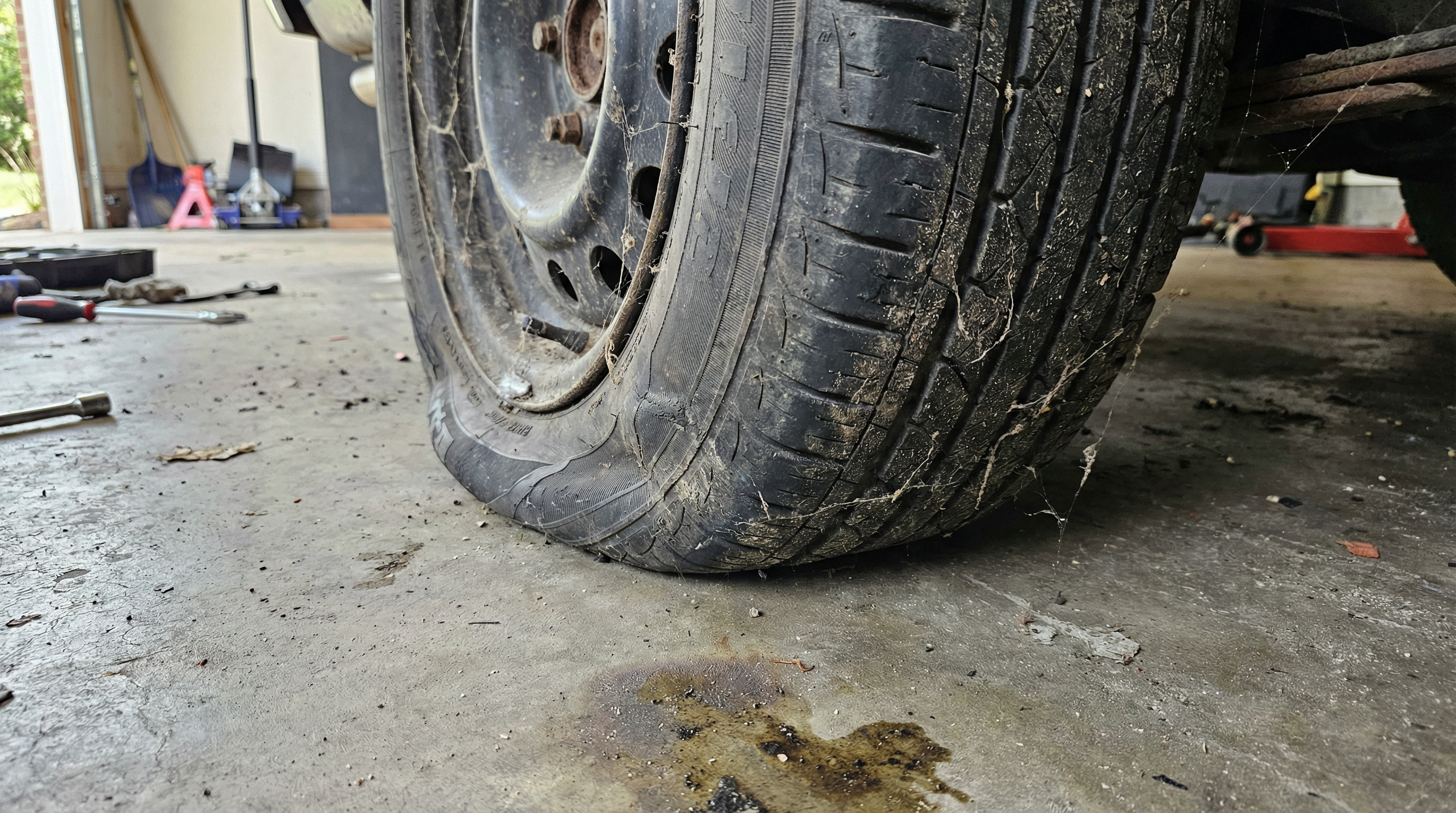
When a car sits in the same spot for weeks, the vehicle's weight always rests on the same point of the tyre. The rubber deforms at that point and creates a flat zone (called a flat spot).
When you start driving again, you'll feel a vibration or a rhythmic "thump-thump-thump" in the first few kilometres. In most cases, the rubber returns to normal after 15–20 minutes of driving. But in extreme cases (months parked, old tyres), the deformation can be permanent.
Solutions:
- Inflate the tyres above normal: Before parking the car for a long time, inflate the tyres 0.3–0.5 bar above the recommended pressure. This compensates for the natural pressure loss over time and reduces the risk of flat spots.
- If possible, move the car: Ask someone you trust to start the car and drive it a few metres (forward and back) once a week. This shifts the tyre's contact point and circulates the fluids.
Problem 3: The Brakes (Treacherous Rust) 🛑
Brake discs are made of iron. Iron + moisture = rust. After a week parked, it's normal for the discs to develop a layer of surface rust (that orange colour). On the first few brake applications, you'll hear a slight "rrrr" that disappears quickly.
But if the car sits for months, the rust can go deeper and the pads can "stick" to the discs. In that case, the first few brake applications can be more abrupt and noisy.
Solution: During the first kilometres after a long parked period, brake gently several times to "clean" the discs. Don't slam the brakes right out of the garage.
Problem 4: Fluids and Fuel ⛽
Fuel degrades over time (especially petrol). After 3–6 months, it can lose its properties and make starting harder. If you're going to leave the car parked for a long time, fill the tank before parking it (less air in the tank = less condensation and oxidation).
Engine oil also degrades through oxidation, even without the engine running. If the car has been parked for more than 6 months, change the oil before going back to driving normally.
The Hook: Multipark Looks After Your Car While You're Away ✈️
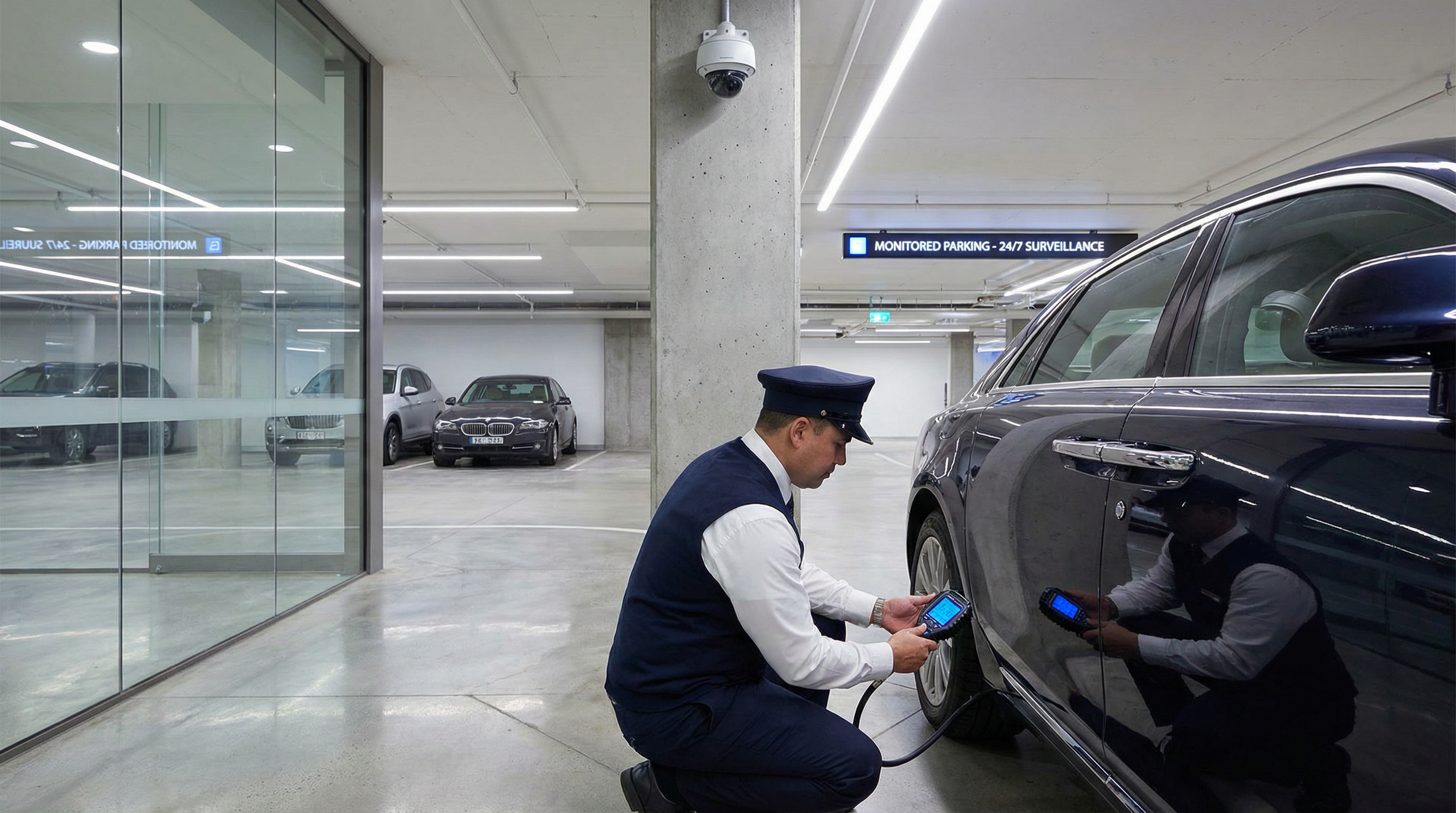
If you're going to be away for a month or more, leaving the car on the street or in an unsupervised garage is asking for trouble. Dead battery, deformed tyres, rusty brakes and, if it's on the street, the risk of vandalism or fines.
At Multipark, your car stays in a covered and secure facility, protected from the sun, rain and prying eyes. But the best part is that our team doesn't just park the car and forget about it. We monitor the vehicle's condition during your absence.
And if you want to go further, you can add extra services to your booking: battery check and charging, tyre pressure adjustment, complete wash and even mechanical inspection through our partners. When you land, the car is just as you left it (or better).
Don't let your car "die of boredom". Run the simulation and book your Valet Parking on the Multipark website and travel with peace of mind, knowing your car is in good hands!