Meta Description
Discover the best of Bologna with this 3-day itinerary. A complete guide to exploring the world’s oldest university city, its flavours and its secrets, without rushing.
Introduction
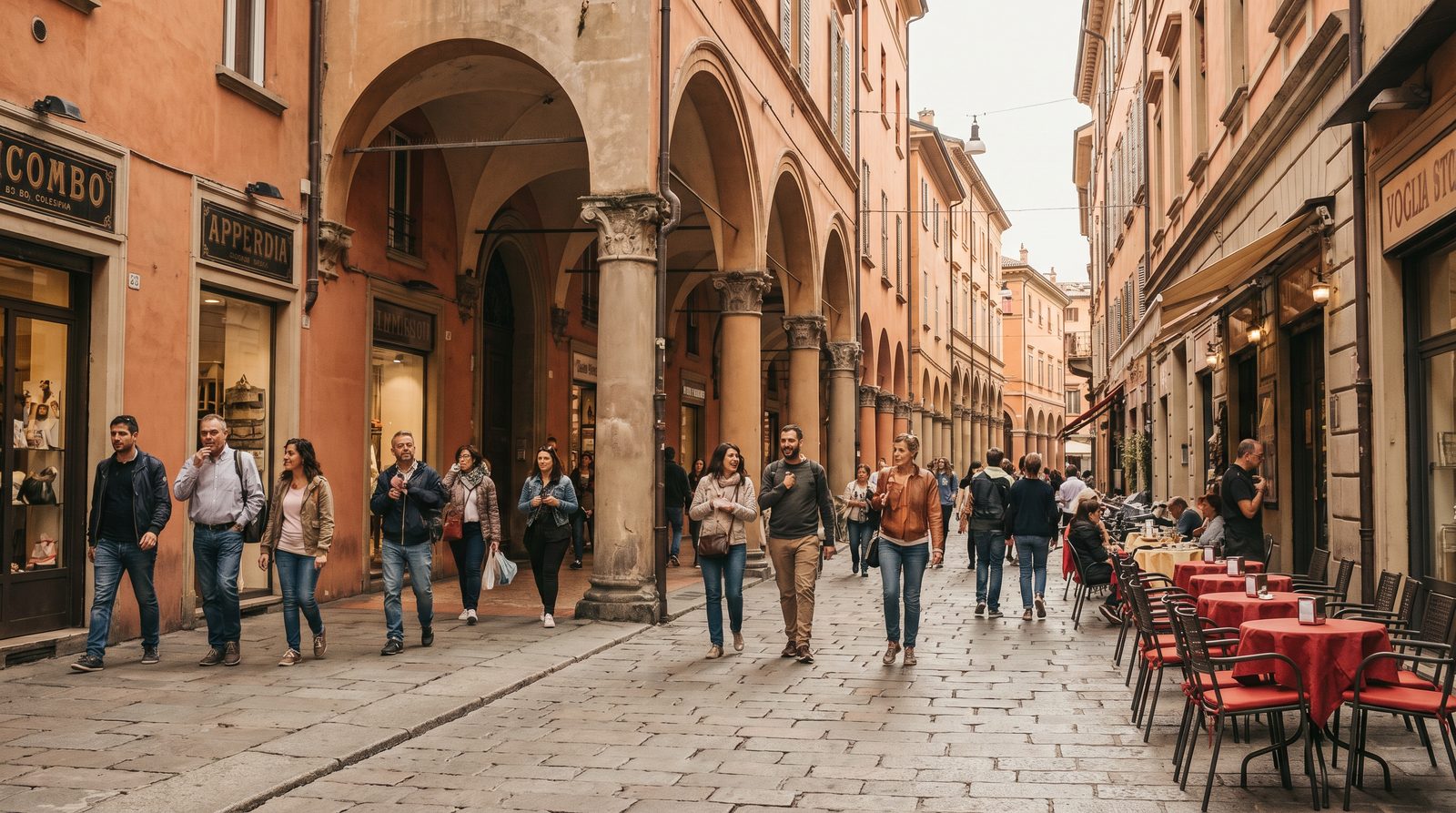
Bologna, the capital of the Emilia-Romagna region, is a city that invites you to discover it without rushing. Known by its three nicknames — ‘La Dotta’ (the Learned), for being home to the oldest university in the western world, ‘La Grassa’ (the Fat), for its rich and delicious cuisine, and ‘La Rossa’ (the Red), for the predominant colour of its rooftops and buildings — Bologna is a destination that wins over any traveller. Far from the crowds of other Italian cities, it offers a more authentic and peaceful experience. Get ready to lose yourself in its more than 40 kilometres of porticoes, taste real ‘ragù’ and discover the secrets of a city that is as historic as it is vibrant.
Day 1: The Heart of Bologna
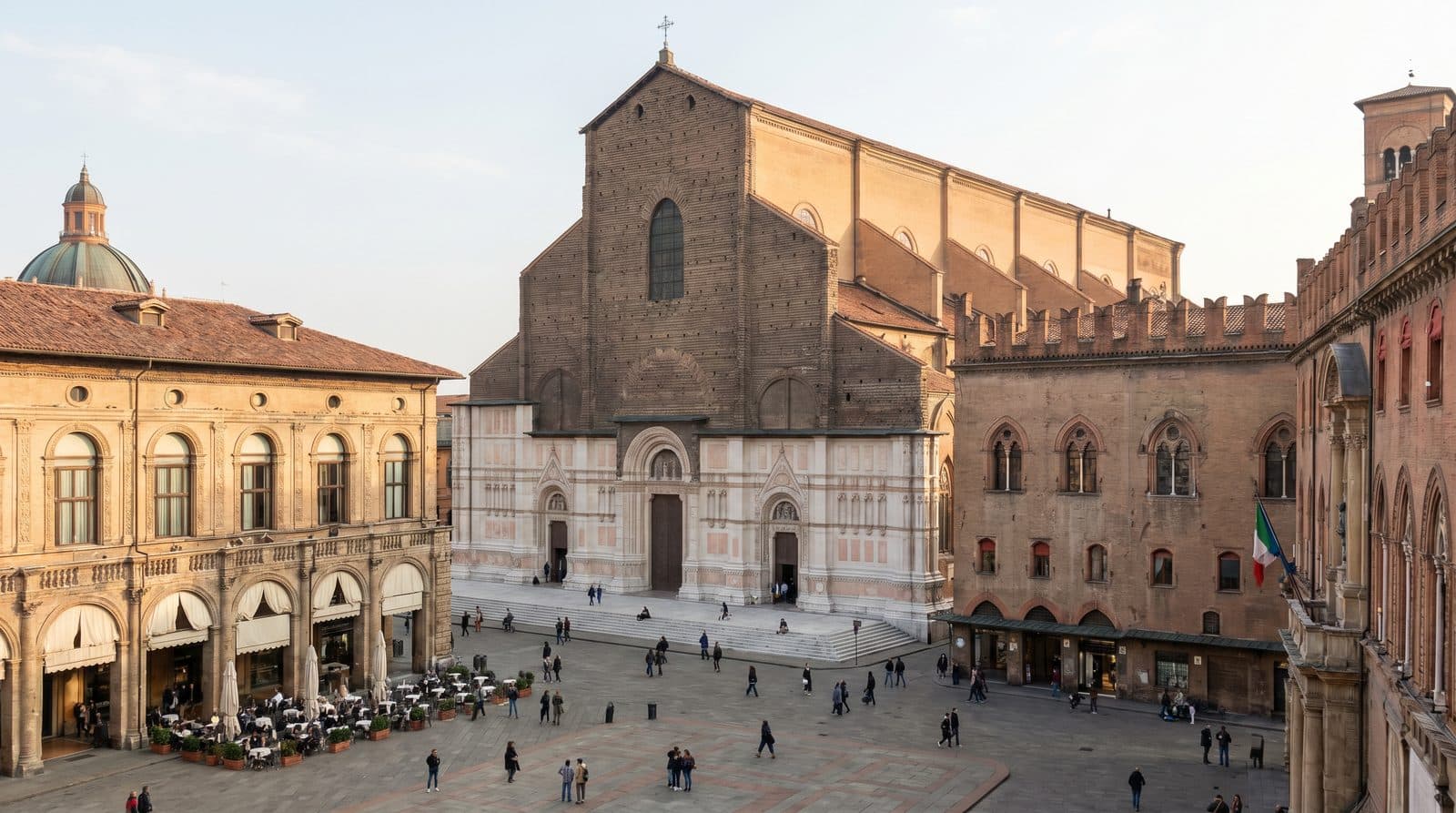
Start your itinerary in Bologna’s beating heart: Piazza Maggiore. Surrounded by imposing medieval buildings, it’s the perfect starting point. Admire the unfinished façade of the Basilica of San Petronio, one of the largest in the world, and feel the energy of the square. Right next door, in Piazza del Nettuno, you’ll find the famous fountain with the statue of Neptune, one of the city’s symbols.
Then dive into the Quadrilatero, the old medieval market. It’s a maze of lanes packed with food shops, fruit and fish stalls and, of course, fresh pasta. It’s the ideal place for a first taste of Bologna’s flavours, and maybe a mortadella sandwich.
Continue your walk to the Garisenda and Asinelli Towers, Bologna’s great signature. These leaning towers tell stories of power and rivalry between noble families. Heads up: climbing the Asinelli Tower is suspended indefinitely for conservation work, but its grandeur from below is still a sight.
In the late afternoon, visit the Archiginnasio, the original seat of the University of Bologna. Don’t miss the incredible Anatomical Theatre, a wooden hall where anatomy classes were once held. It’s a true journey back in time.
Day 2: Perspectives and Flavours
The second day is for seeing Bologna from another angle and, of course, diving even deeper into its cuisine. Get ready for a memorable climb to the Sanctuary of the Madonna di San Luca. You can take a small tourist train or, if you’re feeling energetic, do the nearly 4 km walk under the longest portico in the world. The view over the city and the surrounding landscape is the reward.
Back in the centre, hunt down one of Bologna’s best-kept secrets: the Finestrella on Via Piella. It’s a small window that opens onto one of the few canals still surviving in the city, a reminder of the "little Venice" that Bologna once was.
In the afternoon, dedicate yourself to the art of eating. Bologna offers plenty of culinary experiences. You can opt for a cooking class to learn how to make your own fresh pasta, or join a food tour to taste local specialities, from Parmigiano-Reggiano cheese to balsamic vinegar from Modena. It’s a delicious way to get to know the city’s culture.
Day 3: Art, History and Surroundings
On the third day, you have two excellent options. If you prefer to keep exploring the city, dedicate the morning to visiting the Pinacoteca Nazionale di Bologna, which houses an important collection of Emilia-Romagna art, or MAMbo, the Museum of Modern Art of Bologna, for a dose of contemporary culture. Another must is the Basilica of Santo Stefano complex, also known as the "Seven Churches", a fascinating cluster of religious buildings that takes you through different eras.
If you’re feeling adventurous, take advantage of Bologna’s central location for a day trip. Cities like Modena, home to Ferrari and balsamic vinegar, or Parma, famous for its prosciutto and cheese, are a short train ride away. It’s a great way to enrich your Italian experience and discover more of the incredible Emilia-Romagna region.
What you should know before you go
- Walk: Bologna’s historic centre is relatively compact and the best way to explore it is on foot. The porticoes are a blessing, protecting from both sun and rain.
- Transport: For longer distances, like the trip to the Sanctuary of San Luca, public transport works well. The Marconi Express is the fastest way to get from the airport to the centre.
- When to go: Spring and autumn are the best times to visit, with pleasant temperatures and fewer tourists. Summer can be quite hot and humid.
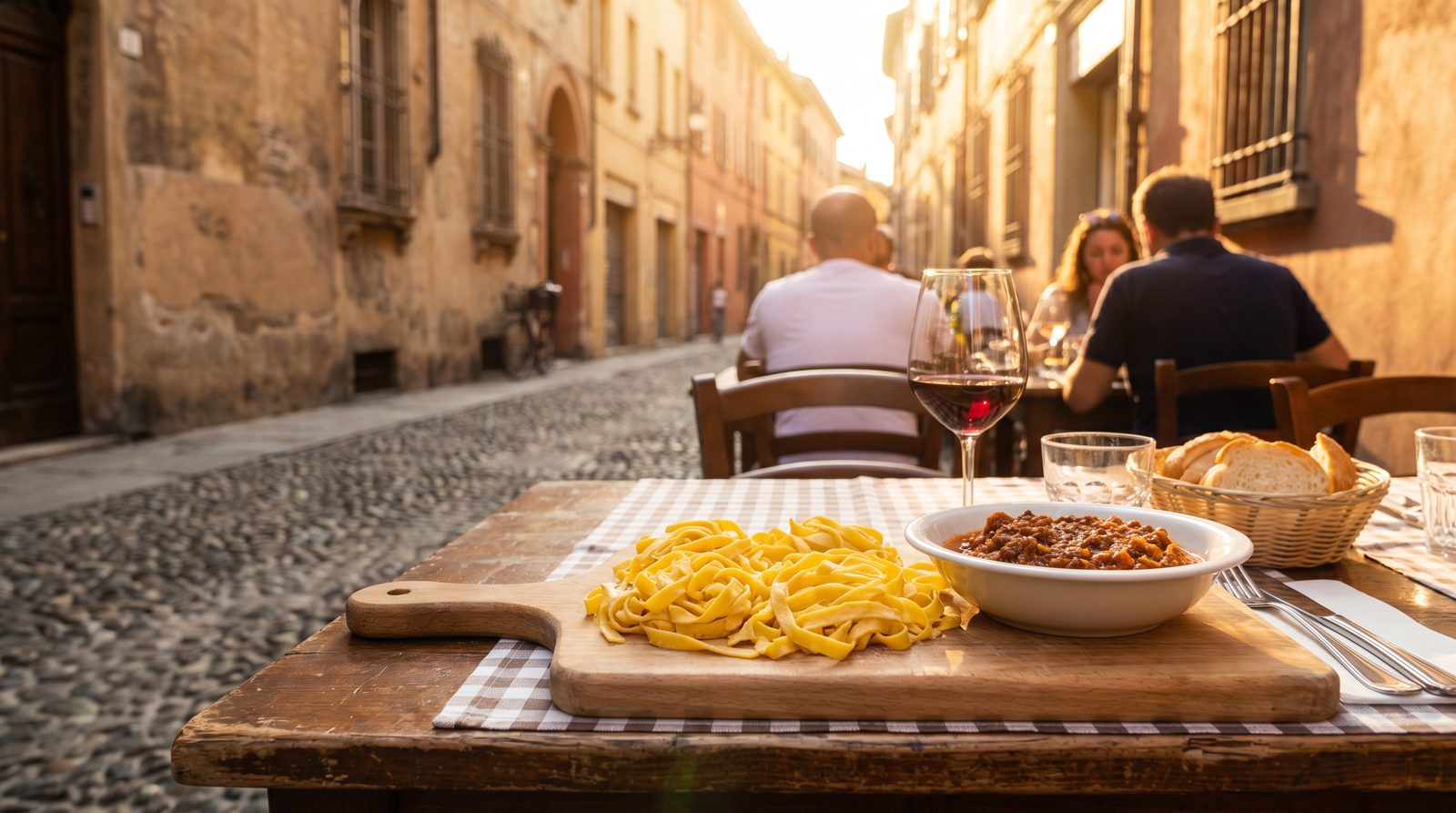
- Food is serious business: Don’t order "spaghetti bolognese". The authentic dish is tagliatelle al ragù. Take the chance to try tortellini in brodo and, of course, mortadella.
Where Multipark fits in
Exploring Bologna on foot is a delight, but if the idea of discovering the treasures of Emilia-Romagna excites you, having a car gives you the freedom to do it at your own pace. You can arrive in Bologna, leave the car at one of the Multipark network’s safe and well-located parks, and then use it for those getaways to Modena, Parma or the region’s hills. It’s the best of both worlds: the calm of strolling through the city and the flexibility to go further.
Conclusion
Bologna is a city that surprises and conquers. In three days, you can feel its pulse, taste its extraordinary food and admire its historic beauty without the rush of other more famous destinations. It’s a city to be lived slowly, getting lost in its streets and finding its secrets at every corner. One thing’s for sure: you’ll come back with a suitcase full of good memories and, probably, a few extra kilos. And it’s entirely worth it.
Driving? Plan your parking with Multipark and explore the region at your leisure.