Introduction
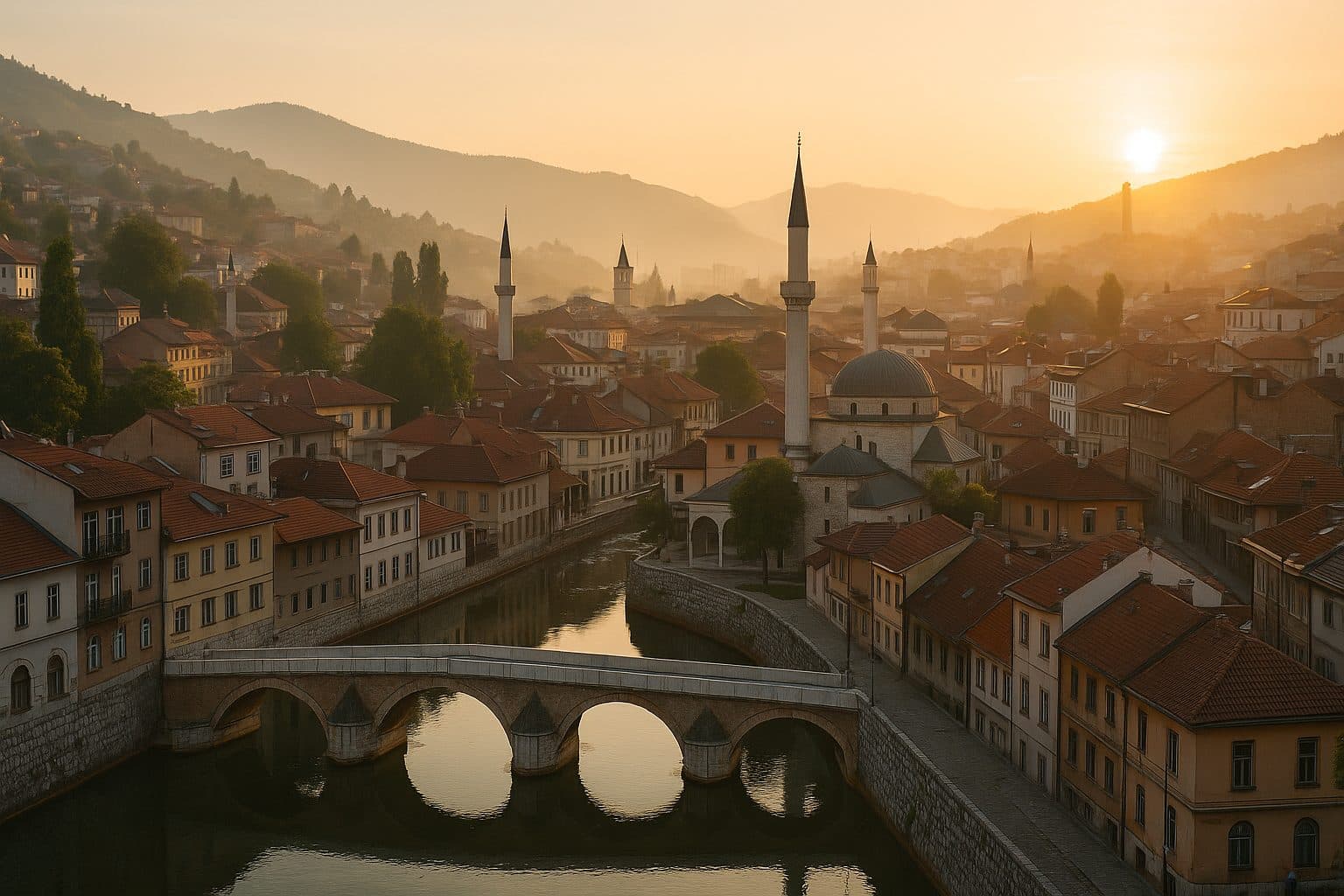
Sarajevo is a city you don’t forget. Marked by a dense history, where East and West meet on every corner, the capital of Bosnia and Herzegovina is a melting pot of cultures, religions and emotions. Known as the “Jerusalem of Europe”, here mosques, Catholic and Orthodox churches and synagogues coexist, often just a few steps apart. This 3-day itinerary in Sarajevo was designed to take you to the heart of a city that rose from the ashes — without rushing and with an open heart for what it has to tell you.
Day 1: The Ottoman Heart
The first day is dedicated to Baščaršija, Sarajevo’s old bazaar and historic centre. Get ready for a journey back in time through its cobbled streets, where the aroma of Bosnian coffee and ćevapi in the air will guide you.
- Morning: Start at the Sebilj Fountain, the iconic wooden “dovecote” at the centre of the main square. From there, lose yourself in the bazaar’s lanes, exploring the craft shops, from the copperwork on Kazandžiluk Street to carpets and jewellery.
- Afternoon: Visit the Gazi Husrev-beg Mosque, one of the most important examples of Ottoman architecture in the Balkans. Right next door, you’ll find the Clock Tower (Sahat-kula). Carry on to the Latin Bridge, the spot where Archduke Franz Ferdinand was assassinated, the event that triggered the First World War. It’s a simple place, but charged with historical meaning.
Day 2: The Scars and the Hope
The second day is for understanding Sarajevo’s more recent and painful history: the siege during the Bosnian War in the 1990s. It’s a day for reflection, but essential to understand the city’s resilience.
- Morning: Take a taxi or a tour to visit the Tunnel of Hope (Tunel Spasa). This tunnel was the city’s only link to the outside world during the siege, and today is a moving museum. The visit is a lesson in survival.
- Afternoon: Back in the centre, look out for the “Sarajevo Roses”, mortar craters filled with red resin in memory of the victims. Visit the War Childhood Museum, a powerful and touching exhibition about children’s experiences during the conflict. To end the day on a hopeful note, head up to the Yellow Fortress (Žuta Tabija) for a panoramic view over the city at sunset.
Day 3: Nature and Panoramic Views
On the last day, we’ll breathe in some fresh air and see Sarajevo from above, exploring its relationship with the surrounding mountains.
- Morning: Take the cable car up Mount Trebević. The ride alone offers spectacular views. At the top, beyond the hiking trails, you’ll find the abandoned bobsleigh and luge track from the 1984 Winter Olympics. Today it’s an open-air urban art gallery, a fascinating and somewhat surreal place.
- Afternoon: Head back down to the city and take a final walk along Ferhadija, the main pedestrian street that transitions from Austro-Hungarian to Ottoman architecture. It’s the perfect place for some last-minute shopping or to simply sit at a café and watch the rhythm of the city.
What you should know before you go
- Currency: The local currency is the Bosnian Convertible Mark (BAM or KM). Although some tourist spots accept euros, it’s always better to have local currency for small expenses.
- Language: The official language is Bosnian. In tourist areas, English is commonly spoken.
- When to go: Spring and autumn (May, June and September) are ideal, with pleasant temperatures and fewer crowds. Summer can be hot and winter quite cold and snowy.
Where Multipark fits in
Exploring a city like Sarajevo calls for time and peace of mind. Leave the parking stress behind. With Multipark, you can plan your drive to your departure airport knowing your vehicle is safe and waiting for you. That way, your only concern is to dive into the history and beauty of Sarajevo.
Conclusion
Sarajevo is more than a destination; it’s an experience. It’s a city that confronts you with the harshness of history, but also embraces you with the warmth of its people and their incredible will to live. You’ll come back changed, with the certainty that even in the deepest wounds, hope can flourish.