
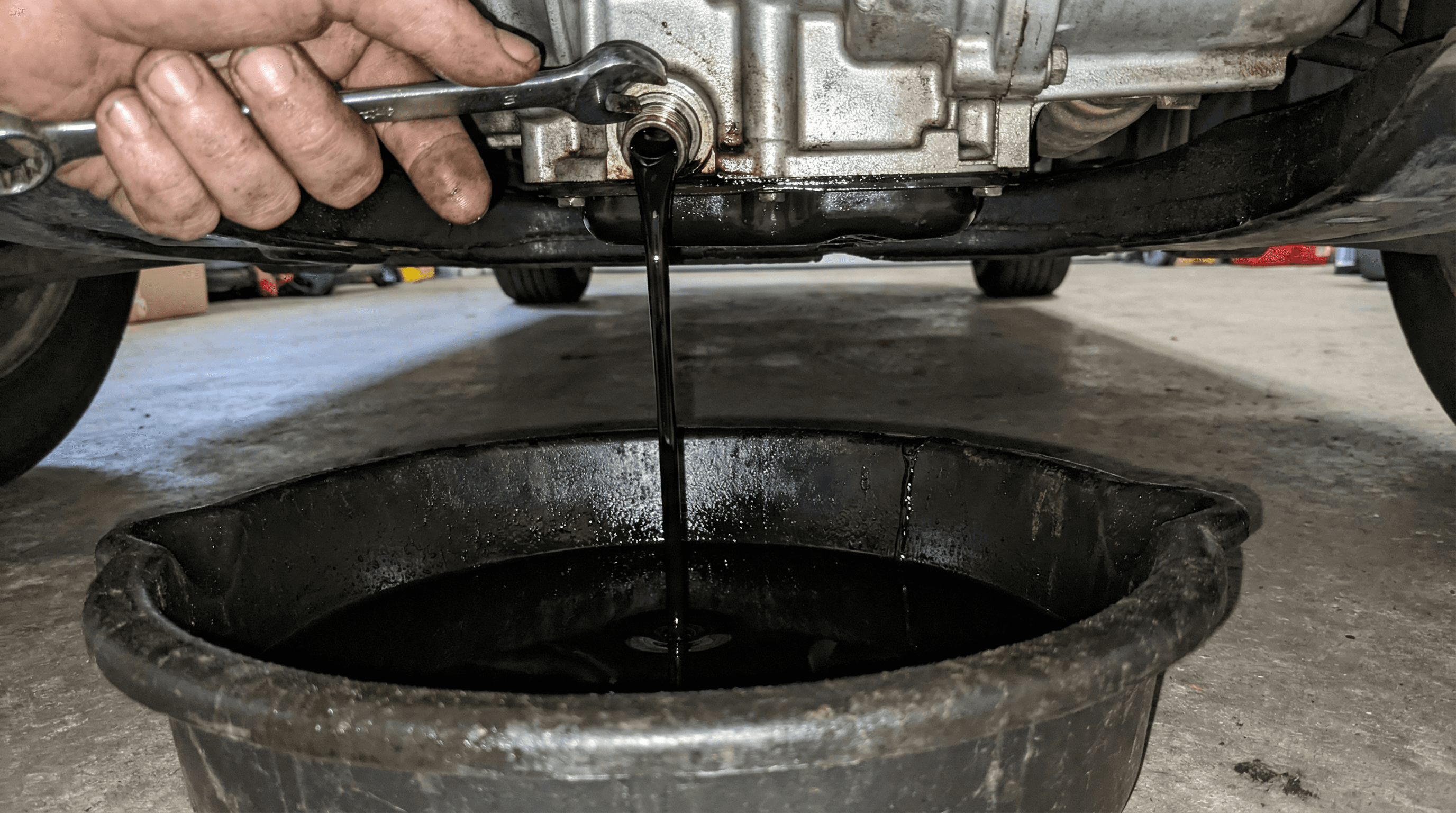
"Oil is all the same, mate. I just put in the cheapest one and the car runs." If you've ever said or heard that line, this article is for you. Because no, oil is not all the same. And saving 10 euros on a jug of off-brand oil can cost you 2,000 to 5,000 euros on a seized engine.
Martin isn't a mechanic, but he's already learned this lesson the expensive way. Let's untangle the world of engine oils so you never get fooled at the garage again — or do something dumb at the supermarket.
What on Earth Does 5W30, 5W40, 10W40 Mean? 🤔
These numbers aren't NASA secret codes. They describe the viscosity of the oil — its "thickness" at different temperatures.
- The first number (before the W): Tells you how the oil behaves when cold. The lower it is, the more fluid it stays at start-up (important in winter). The "W" stands for Winter.
- The second number (after the W): Tells you how the oil behaves when hot. The higher it is, the thicker it stays once the engine warms up.
Practical example: A 5W30 is more fluid both cold and hot than a 10W40. Modern engines (turbo, direct injection) usually need thinner oils (5W30 or 0W20) to reduce friction and save fuel. Older engines may need thicker oils (10W40 or 15W40).
Golden rule: Always use the viscosity recommended by your car's manufacturer. It's in the owner's manual. Don't improvise.
Why Cheap Oil Can Be a Trap 💸

The price of oil isn't only about the brand. The real difference lies in the additives and the certifications.
A quality oil contains additives that protect the engine against wear, clean carbon deposits, resist oxidation and keep viscosity stable for thousands of kilometres. A cheap oil might have the right viscosity printed on the label, but it degrades much faster and doesn't protect the engine the way it should.
On top of that, carmakers require specific certifications (such as VW 504.00/507.00, MB 229.51, BMW LL-04, etc.). If you use an oil that doesn't carry the certification your car demands, you can:
- Lose your warranty (if the car is still under warranty).
- Clog the particulate filter (DPF) in modern diesel engines.
- Speed up wear on internal engine components.
When Should You Change the Oil? ⏰
The old rule of "every 10,000 km" no longer applies to all cars. Modern engines running longlife oils can stretch 20,000 to 30,000 km between changes. But watch out:
- If you mostly drive in town (stop-start, short trips), the oil degrades faster. Shorten the interval.
- If the car sits parked for long stretches, the oil also degrades through oxidation. Change it at least once a year, even if you've barely driven.
The Hook: Servicing While You're on Holiday ✈️
You know that service you've been putting off for months because "you don't have the time"? The oil change that should have happened 3,000 km ago? The MOT that's about to expire?
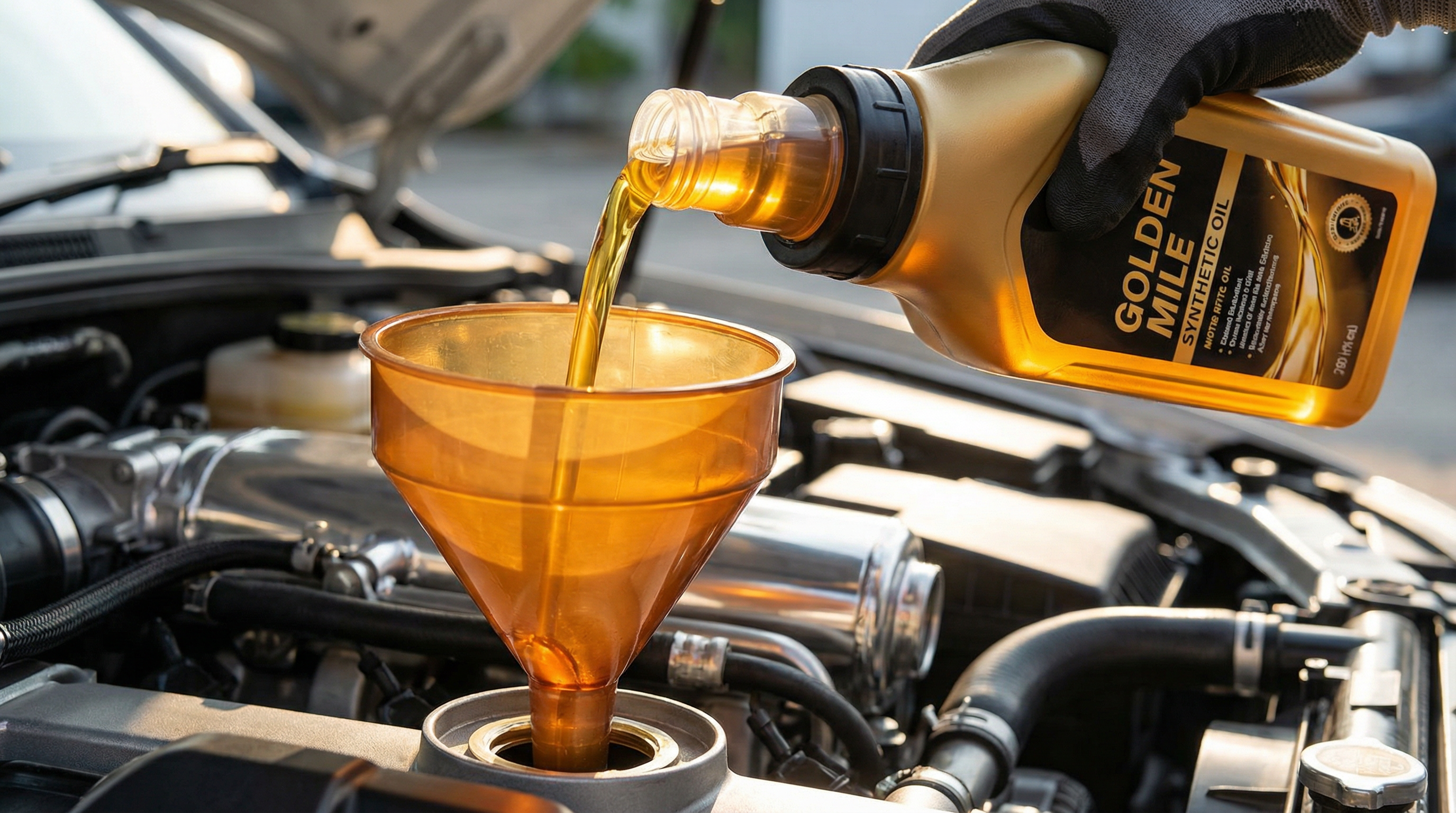
With Multipark, you can kill two birds with one stone. When you drop your car off with us before flying out, you can add a service and maintenance package through our garage partners. We take your car to the workshop, do the oil change (with the right oil and the right certification) and, by the time you land, the car is serviced and ready to drive.
Stop putting it off. Run your Valet Parking quote at the Multipark website and use your holidays to bring your car up to date!