Some destinations show up after months of planning, and others walk into your life almost like an open window. Naha, in Okinawa, was one of the second kind. We had little time, zero room for grand schemes and a serious wish not to waste a single piece of the day. The plan was simple: leave early, see as much as possible without turning the day into a miserable marathon, and figure out fast whether this city was just a pleasant stopover or a place that genuinely calls you back.
Naha has that rare knack of feeling practical and exotic at the same time. There's a port, there's bustle, there are lively shopping streets, there's a market, the smell of food everywhere, and at the same time you always sense the sea nearby reminding you you're on an island. It's not a city to consume in a blind hurry. It's more a city to absorb, even when the clock is squeezing you.
Arriving and reading the city's rhythm right away
The first impression was order, cleanliness and energy. Even where it gets busy, everything seems to work with a kind of calm of its own. It's not still, hushed calm; it's more a steady rhythm with almost no unnecessary noise. For someone passing through, that helps you slip into the day with less stress and more curiosity.
Instead of trying to see twenty things just so we could later say "we passed by", we preferred to set up a logical route. The idea was to combine a few iconic streets, some local culture, food and a more open moment by the sea. When you only have one day, the difference between a good outing and a clumsy one almost always comes down to this: pick less, but pick better.
Kokusai Dori: the most immediate heart of Naha
If you want to start by getting a feel for the city, Kokusai Dori is one of those places where everything makes sense within the first few minutes. Shops, restaurants, light tourist signs, but also enough local life that it doesn't feel like a stage set built for foreigners. There's colour, there's movement and there's always something that catches your eye, even if it's an absurd shop window, an improbable bit of packaging or a sign that forces you to stop.
Walking it is an efficient way to gain context. You quickly realise that Okinawa has its own identity, that it doesn't simply ride on Japan's better-known imagery, and that the city knows how to mix the useful with the curious. In a short itinerary, this kind of street works almost like an opening summary: it gives you atmosphere, food options and a sense of distance.
The market and the tastiest part of the experience
Some cities are best explained in a museum, others at the table. Naha, at least on a first encounter, clearly felt like the second kind. The market was one of the most alive moments of the day. Fish, fruit, small dishes, people moving around, stalls with personality and that wonderful sense that food here isn't just a tourist accessory.
Even without diving into anything too technical, you can tell the local cuisine has character. For anyone who likes to taste a place through their palate, this corner of the city is gold. And even for picky eaters, the market is always good for watching, photographing and feeling the real pulse of the place.
Small detours that give the route its charm
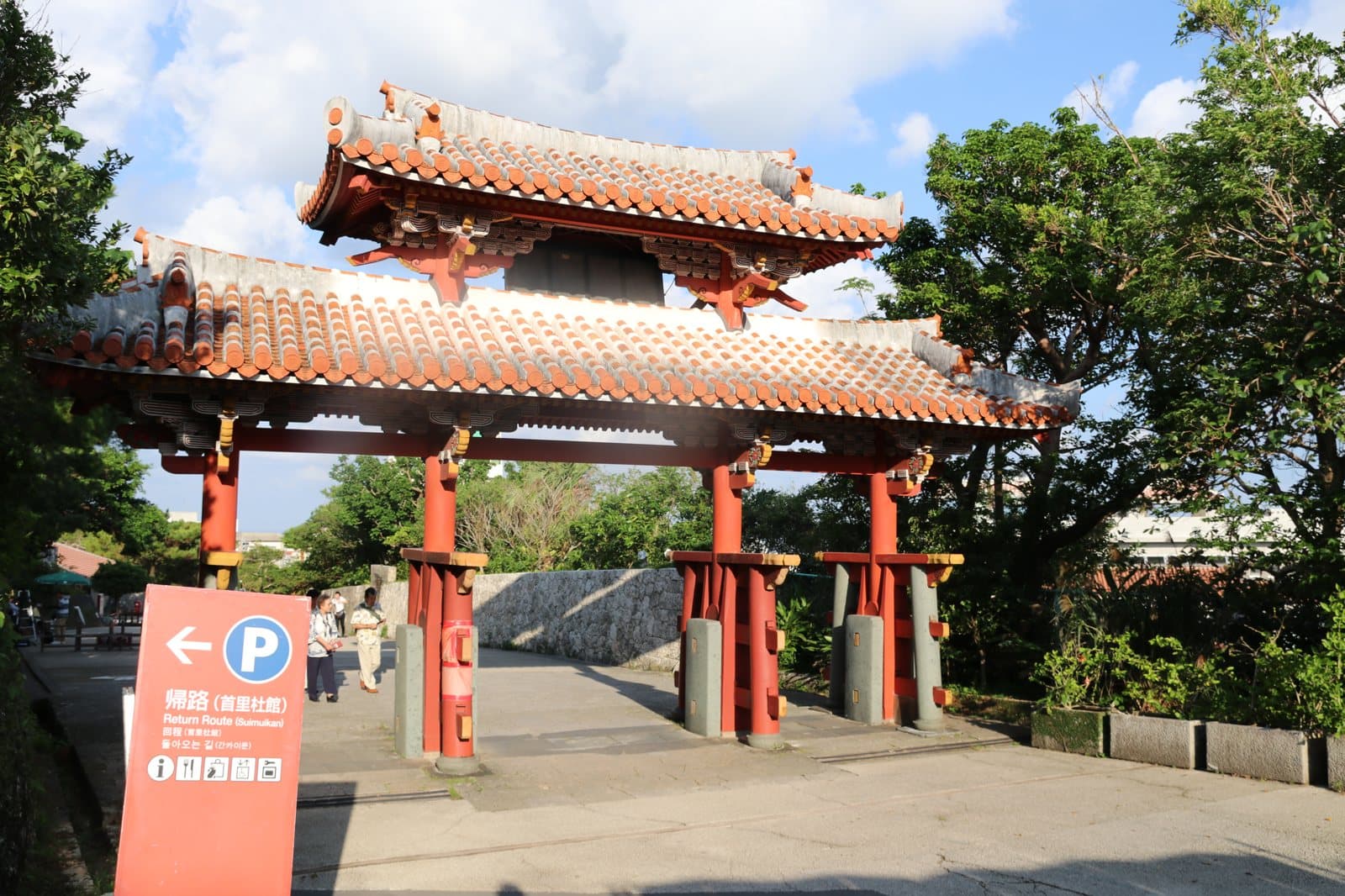
One of the best things about a one-day itinerary is leaving room for chance. Naha rewards that. Between one main street and another, you'll find corners, stairways, façades, small urban shrines and details that wouldn't necessarily top an "official" list, but give the memory depth. We didn't go monument-hunting one after another. We tried to understand how the city assembles itself from the inside.
That approach also helps you avoid the classic mistake of the rushed traveller: photographing everything without really looking at anything. In Naha, the details worked better than checklist obsession. And on a short day, that's worth a lot.
The sea as the right way to close a well-spent day
This being Okinawa, there was one thing we really didn't want to leave out: the relationship with the sea. Even with no time for a proper swim or hours on a beach, it's worth closing the route with a more open, bluer, less urban moment. The city changes its breathing once water enters the picture.
That contrast was one of the highlights of the day. In the morning you're more bound to urban logic, to streets, shops and food. Later, when the sea appears, the trip gets another dimension. Suddenly you're not just visiting a city; you're starting to understand the island that holds it up.
What we'd do the same and what we'd do better
We'd repeat the decision not to overcomplicate the route. One day in Naha won't let you "see all of Okinawa", but it works perfectly as a first contact full of interest. We'd also repeat, no hesitation, the balance between street, market and coast. That's what gives the day variety.
If we could improve anything, maybe we'd plan the meal stops and travel times even more precisely, so there's no temptation to rush for no reason. In a city like this one, half an hour gained in a hurry is worth less than half an hour lived properly.
Is Naha worth fitting into a bigger trip?
It is, especially if you like destinations that leave you with a feeling of beginning rather than a feeling of task completed. Naha doesn't run dry in a day, but it also doesn't frustrate you for only having one day. It gives you enough to walk away satisfied and, at the same time, curious about the rest.
It works very well as a first taste of Okinawa. And for anyone travelling on stopovers, cruises or tight schedules, that's a big quality.
Conclusion
Naha in one day was exactly what a good stopover should be: intense without being chaotic, interesting without feeling forced, and varied enough to stay in memory. Between lively streets, market, food and sea, the day went by too fast — which, honestly, is almost always the sign that the destination did its job well.
If a good adventure is also measured by the urge to return, Naha passed the test with room to spare. Plan your parking with Multipark and travel without worries.