

Dossier · Service
§01

Tyre change and fitting

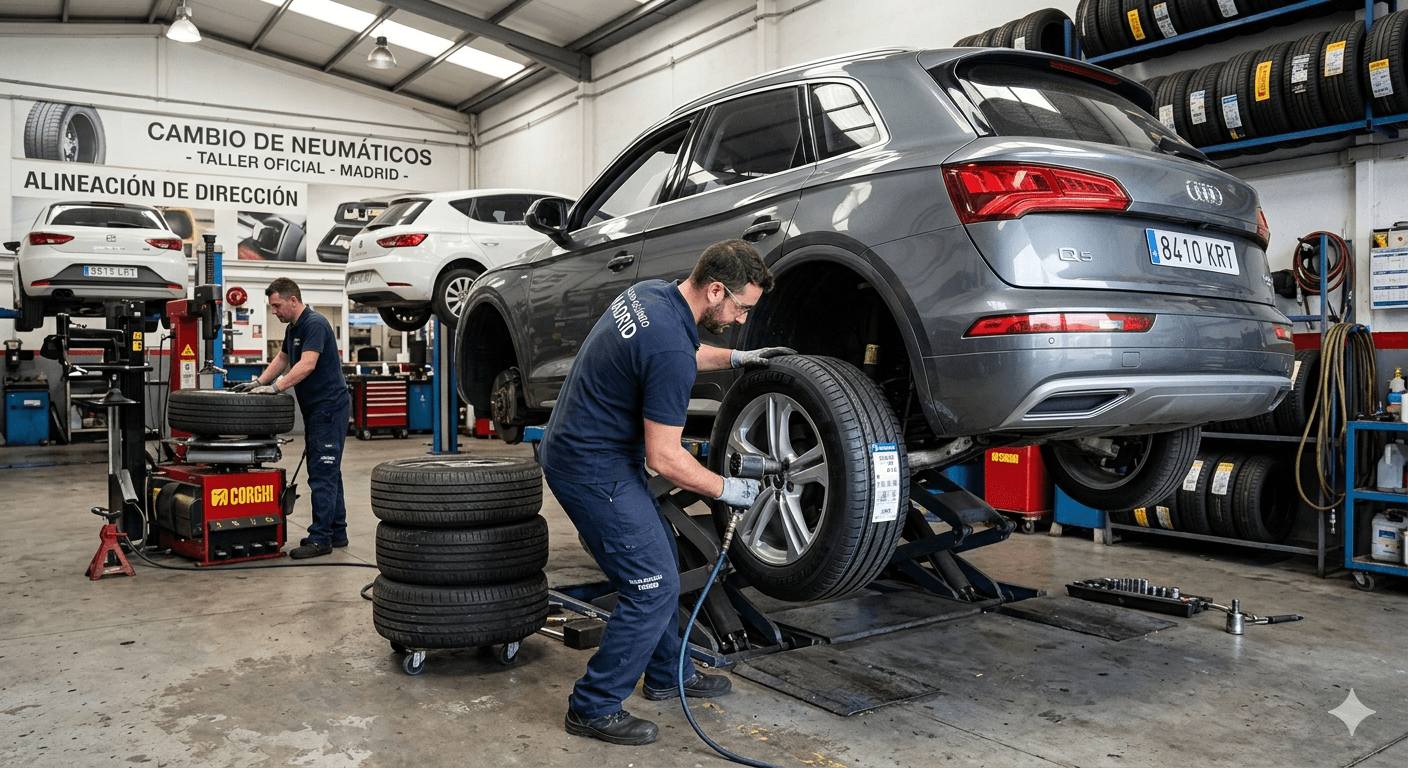
Fitting, balancing and alignment with professional gear. Guidance on brand and correct load/speed indices.

Tyre change and fitting
§02
In detail

Detailed description

§01

Why tyre choice isn't trivial

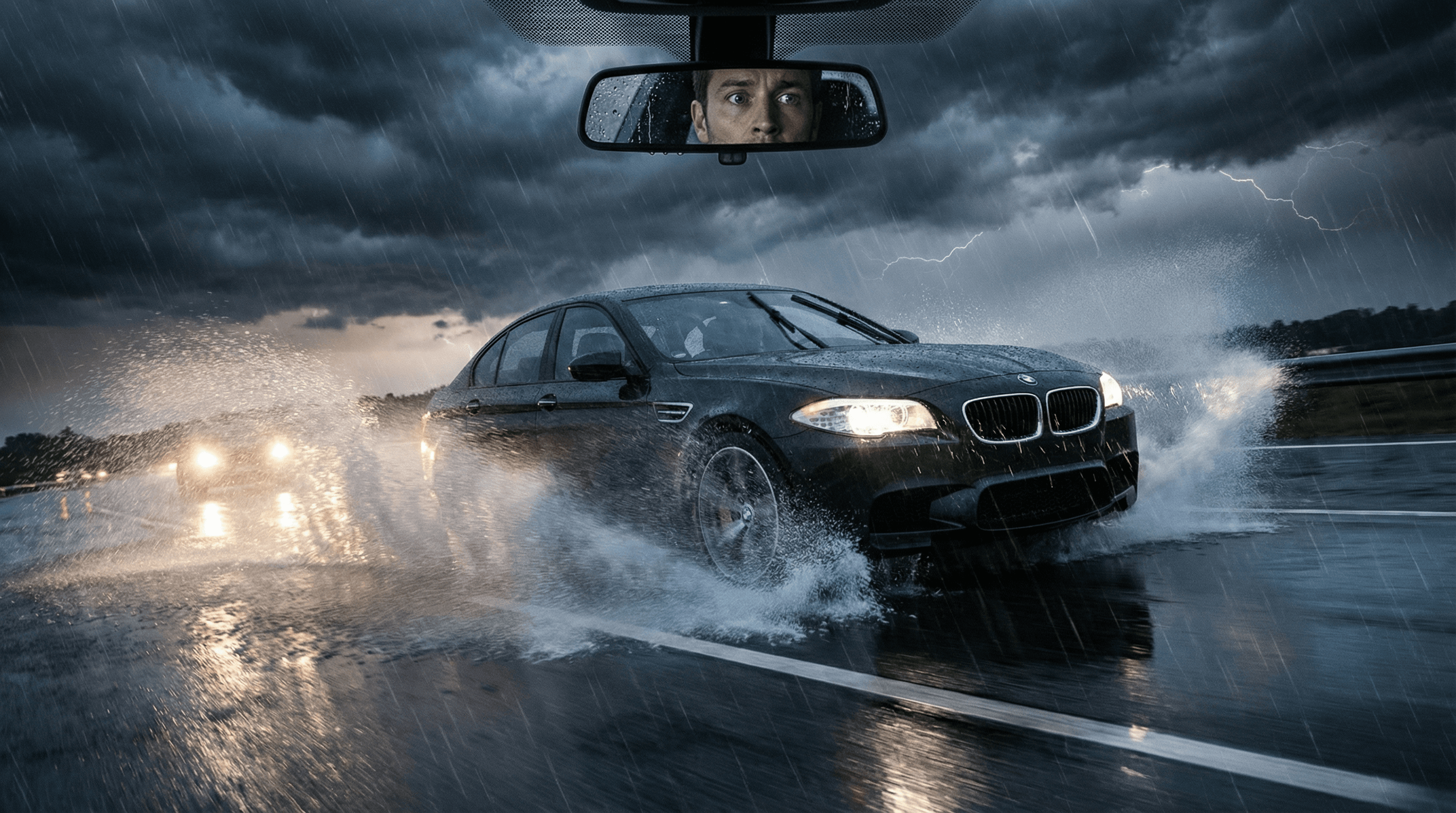
Tyres are the only contact point between car and road. All safety — braking, cornering grip, wet stability, snow traction — passes through four 'footprints' the size of a palm. That's why saving on tyres is usually a bad decision: the price gap between a good tyre and a generic 'tier 3' is €30-60 per tyre, but wet-braking distance difference at 80 km/h can reach 4-5 metres. Five metres is the difference between stopping and crashing.

At Multipark we don't sell generic tyres without guidance. We start by asking: how do you use the car? City, motorway, mountain? Summer or all-season? Your specific car has minimum load and speed indices (on the registration) that can't be ignored — a BMW 3 Series on H- or T-rated tyres is moving slower than the car allows, and in Portugal that's inspection failure.
§02

Brands we work with

We work the full tier 1 range: Michelin, Continental, Pirelli, Goodyear, Bridgestone, Hankook (top of the range), with the ability to order any size the car demands, including runflats, UHP and EV-marked tyres. For mid-value buyers, Nokian, Vredestein, Kumho and Falken are solid options we often recommend.

For specific cases — mandatory winter tyres for Alps or Pyrenees trips, all-season tyres for clients who don't want to store two sets, reinforced tyres for loaded MPVs — we work on consultation. We have access to European and Iberian suppliers with 24-48h delivery.

§03

How we do the change

A proper change is not just 'take old off, put new on'. We start with a rim-friendly dismount (protection for painted or diamond-cut alloy rims, where any scratch during dismount depreciates the rim). We remove old weights and clean the rim edge — any corrosion on the sealing area causes slow pressure loss.

We mount the new tyre with correct orientation (directional tyres have arrows indicating rotation direction — mounting backwards reduces wet grip by up to 40%). We inflate to the car manufacturer's recommended pressure (not the tyre's — they're different). We balance with a machine that considers static and dynamic balancing, and visually validate stick-on weights so they sit hidden inside the rim.

We finish with an optional alignment (but recommended if old tyres showed uneven wear — a sign geometry is out of spec). Without alignment, new tyres can lose 20-30% of life to asymmetric wear.

§04

When to change

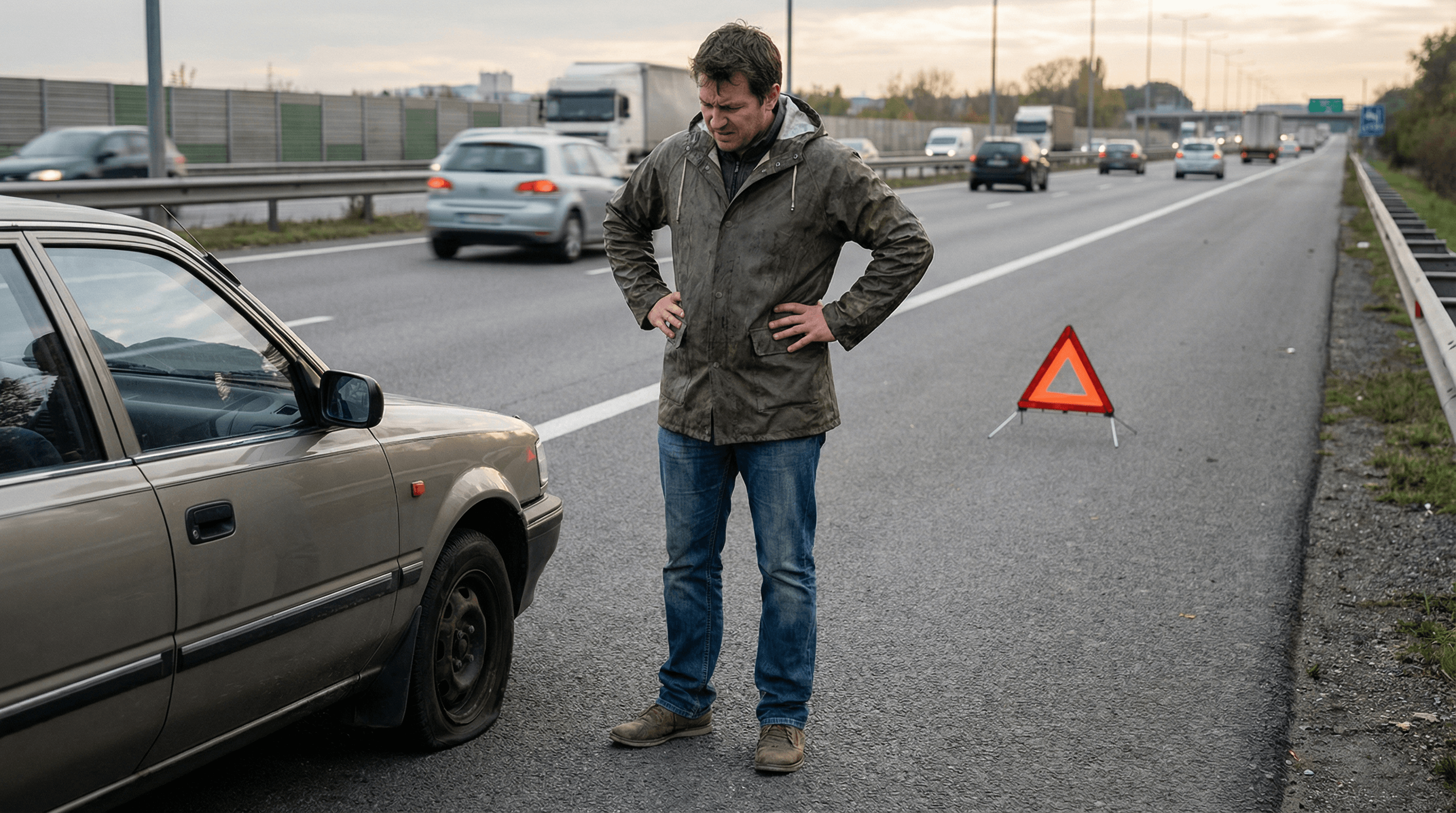
The 1.6 mm tread rule is the LEGAL MINIMUM, not the ideal. Tyres below 3 mm significantly lose wet grip — and braking tests show dramatically longer distances. We recommend swapping at 3 mm for wet-weather drivers, 2 mm for dry-majority driving.

Watch age too: tyres older than 6 years, even with valid tread, lose properties due to rubber ageing. The manufacture date is the 4-digit DOT on the sidewall. Cars parked in the sun age tyres faster.

Frequently asked · §03

Most frequent questions

Quick answers to the questions our clients tend to have before booking this service.

§05
Next step

Ready to proceed?

Talk to the team to agree on dates, share vehicle details and receive a clear quote before any commitment. No sales pressure, no fine print.